Creamymoon
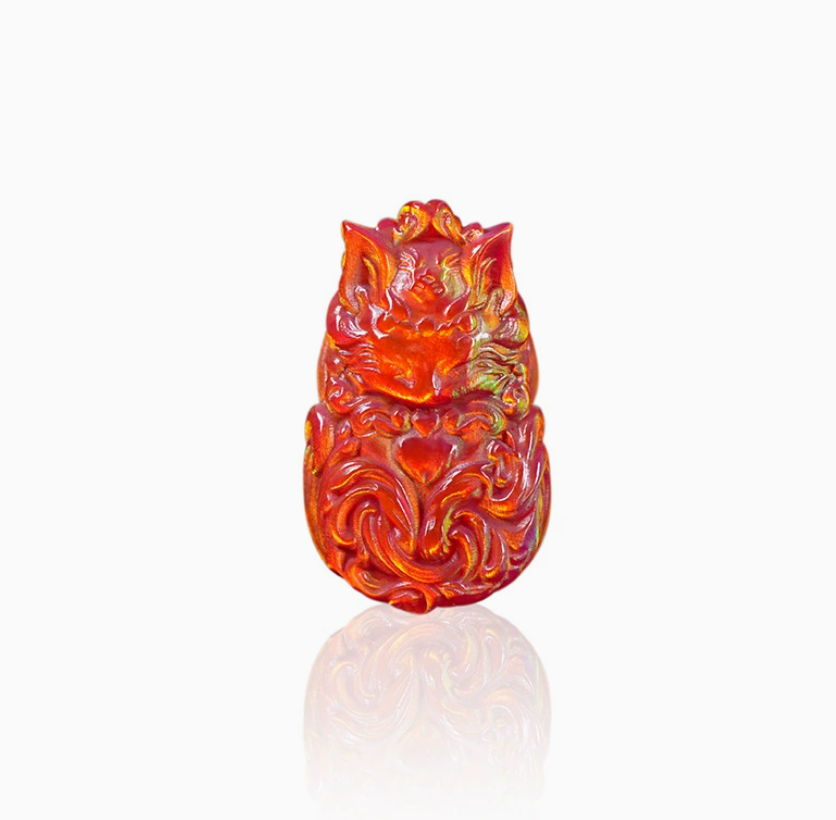
Nine-tailed Fox Synthtic Opal Ampul
Nine-tailed Fox Synthtic Opal Ampul
Regular price
$49.00 USD
Regular price
$38.00 USD
Sale price
$49.00 USD
Quantity
Couldn't load pickup availability
Fengjiu (凤九), often depicted as a fox with nine tails, is a prominent mythical figure in Chinese folklore, especially in the context of Taoist beliefs and ancient Chinese mythology. She is commonly recognized as a powerful immortal being and an embodiment of great fortune, wisdom, and mystical power. Here’s a breakdown of her character and its symbolism:
Origin and Mythical Background
Fengjiu is typically regarded as one of the nine-tailed fox spirits (九尾狐, jiu wei hu), which are central to Chinese mythology. These fox spirits are known to possess extraordinary abilities, such as shape-shifting, enchanting humans, and granting both blessings and curses. The more tails a fox spirit has, the more powerful and ancient it becomes. Fengjiu, with her nine tails, represents the pinnacle of these abilities, embodying a timeless and immortal being with immense mystical power.
Symbol of Luck and Fortune
In Chinese culture, nine (九, jiu) is considered a lucky number because it sounds like the word for “long-lasting” (久, jiu). Therefore, Fengjiu is often associated with eternal luck and the idea of unending fortune. Having nine tails symbolizes an abundance of power and prosperity, suggesting that she can bestow lasting blessings and bring about good fortune. The nine-tailed fox spirit is thought to hold the power to influence the course of fate, bringing about both blessings and protection for those who seek her favor.
The Powerful Immortal
Fengjiu’s status as a powerful immortal means she is beyond mortal constraints, existing in a world of eternal life and great wisdom. Immortals in Chinese mythology are often depicted as having the ability to transcend the limitations of human beings, gaining both supernatural abilities and a deep understanding of the cosmos. Fengjiu, being a nine-tailed fox, has the power to control elements of nature, transform her form, and even influence human lives with her magic.
Her abilities may include:
• Shape-shifting: The nine-tailed fox can transform into beautiful women, creatures, or even other mythical beings to interact with the mortal world.
• Immortality: As a powerful immortal, Fengjiu is ageless and cannot die by natural means.
• Wisdom and Divination: She can read the signs of the world and predict the future, helping people navigate their lives with insight.
• Good Fortune: Fengjiu is often called upon to grant prosperity, success, and happiness.
Cultural Significance and Representations
Fengjiu has been depicted in many forms, from traditional tales to modern media. In certain myths, she is seen as a benevolent figure, bringing luck and blessing to those worthy of her favor, while in other interpretations, she may be more enigmatic or even mischievous. However, overall, she represents the idea of transformative power and the influence of fate.
In addition to her ties to luck, Fengjiu is sometimes shown as a guardian or protector, using her powers to shield people from misfortune or harm.
Fengjiu in Modern Culture
In more recent adaptations, such as popular Chinese dramas or novels, Fengjiu’s character often takes on a more personal dimension. She may be depicted as a loving, strong-willed immortal who is capable of both compassion and ferocity, highlighting the complexity of her character. She may also have connections to other mythological figures or celestial beings, such as gods or other immortals, further emphasizing her elevated status in the hierarchy of ancient Chinese mythology.

In Summary:
Fengjiu, the nine-tailed fox, is a mythical immortal being symbolizing immense power, eternal life, and good fortune. Her nine tails not only mark her as a being of extraordinary strength but also link her to the idea of unending luck and prosperity. Whether as a figure who influences fate or as a protector who grants blessings, Fengjiu represents the intersection of mysticism, fortune, and the divine in Chinese mythology.